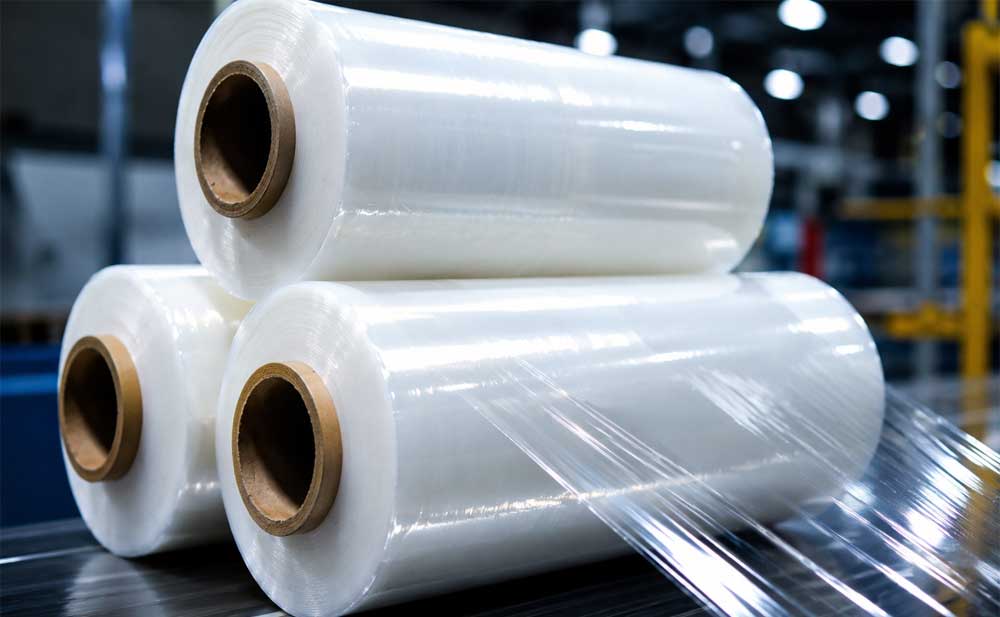
Comparison of PPA process aid with internal and external lubricants
Table of contents
# Comparing PPA Processing Aids with Internal and External Lubricants: What Is the Functional Difference?
In the extrusion process, efforts to improve polymer flow and reduce friction have traditionally involved the use of various additives. On one side are conventional internal and external lubricants; on the other are PPA processing-aid masterbatches. Although all three types of additives appear to have the same general purpose—reducing stress—their mechanisms of action are fundamentally different. Understanding this distinction is the key to selecting the right additive for permanently solving production problems such as melt fracture and die drool.
## Mechanism of Action: PPA Is a Specialized Surface Lubricant
The main difference between PPA and conventional lubricants lies in where and how they work. A PPA processing-aid masterbatch is based on fluoropolymer additives. Because these additives are incompatible with the primary polymer, such as PE or PP, they undergo the following process:
– **Migration:** At melt-processing temperatures, the fluoropolymer molecules separate from the bulk polymer phase.
– **Surface coating:** These molecules migrate toward and adhere to hot metal surfaces within the equipment, particularly the die lips, creating a dynamic, highly slippery, and non-stick coating.
The performance of the processing-aid masterbatch depends on the formation of this surface coating. By reducing friction between the polymer melt and the metal surface at its source, the coating minimizes shear stress before it reaches the critical level that causes melt fracture.
## Conventional Lubricants: Internal vs. External Performance
Conventional lubricants are generally divided into two main categories. Unlike PPA, both types have limited effectiveness in eliminating melt fracture and die drool at high production speeds.
## Internal Lubricants: Reducing Friction Between Polymer Chains
Internal lubricants—including certain amides and low-molecular-weight waxes—are generally compatible with the polymer melt. Their primary purpose is to reduce friction between polymer chains within the bulk melt.
### Objective
Their main objective is to reduce melt viscosity and improve internal flowability, potentially resulting in an increase in the effective melt flow index (MFI).
### Advantage
Internal lubricants can provide a modest reduction in motor load and processing pressure.
### Limitation
Because internal lubricants do not directly modify the die wall or address interfacial shear stress between the melt and the metal surface, they cannot eliminate melt fracture at high processing speeds. Furthermore, when used at excessive concentrations, they may negatively affect the final mechanical properties of the product.
External Lubricants: Surface Lubrication
External lubricants (such as stearates, PE waxes, or paraffin waxes) possess partial incompatibility with the polymer matrix, which allows them to function at the interface between the melt and the metal surface.
- Objective: To reduce friction at the polymer-metal interface.
- Major Limitation: These lubricants are unstable under the high pressure and high shear rates characteristic of extrusion processes. Instead of forming a stable coating (like PPA), they tend to burn and degrade rapidly, often becoming the primary cause of die drool (the accumulation of degraded material at the die exit).
Comparison Table: PPA vs. Conventional Lubricants
| Key Feature | PPA Processing Aid | Internal Lubricants | External Lubricants |
|---|---|---|---|
| Site of Action | Metal surfaces (forms a stable coating) | Within the melt bulk | Polymer-metal interface (unstable) |
| Melt Fracture Elimination | Yes (Total elimination) | No | No |
| Die Drool Prevention | Yes (Keeps equipment clean) | No | No (Often exacerbates it) |
| Effect on Mechanical Properties | Negligible (Properties maintained) | Possible reduction at high doses | Potential migration to product surface |
| Chemical Basis | Fluoropolymers | Amides, light waxes | Stearates, paraffin waxes |
| Functional Nature | Modifies process boundary conditions | Reduces viscosity | Temporary lubrication |
Frequently Asked Questions (FAQ)
| # | Question | Answer |
|---|---|---|
| 1 | Can PPA be used simultaneously with conventional lubricants? | Yes. In certain formulations, internal lubricants are used to improve overall melt flow within the barrel, while PPA handles the die surface lubrication. However, one must be cautious regarding the dosage of external lubricants. |
| 2 | Why do external lubricants cause die drool? | External lubricants tend to degrade and char under high temperature and shear stress. This burnt material accumulates at the die lips, leading to adhesion and the formation of die drool deposits. |
| 3 | Does using PPA reduce the need for internal lubricants? | Often, yes. Since PPA significantly improves apparent flowability, the necessity for internal lubricants to reduce viscosity and processing pressure is generally diminished.
Conclusion: Why PPA Is the Definitive SolutionConventional lubricants only serve to slightly “ease” the polymer’s movement through the equipment; they fail to address the root cause of extrusion challenges—the intense adhesive force between the polymer melt and the hot metal surface. From a technical standpoint, PPA processing aids are the only additives that specifically target shear stress, neutralizing it at the critical zone: the die exit. This fundamental approach not only enhances production efficiency and reduces energy consumption but also empowers manufacturers to confidently increase line speeds, utilize high-strength (low MFI) resins, and ensure superior surface quality—even in demanding processes such as pipe and profile extrusion. Kavosh Polymer’s processing-aid masterbatch is not just a lubricant; it is a “surface engineer” that eliminates your processing limitations. Take the Next StepTo gain a deeper understanding of the technical distinctions or to receive expert consultation on which grade of Kavosh Polymer’s processing-aid masterbatch is optimized for your production line, please contact our experts today. For inquiries regarding competitive pricing and orders, reach out to our sales team now to optimize your production efficiency. |